In a nutshell
- 🌱 Eggshells supply calcium carbonate (CaCO₃) that gently neutralises acidity, releases Ca²⁺, and stabilises soil pH over time without harsh spikes.
- 🧪 Proper prep matters: rinse, dry, and grind finely—smaller particles boost dissolution; apply lightly in autumn or spring and pair with organic matter for better retention.
- 🔓 Slow, steady calcium improves nutrient availability, freeing phosphorus, aiding molybdenum uptake, and reducing toxic aluminium/manganese while supporting strong cell walls and fruit quality.
- 📊 Outcomes depend on particle size, moisture, temperature, and starting pH; a soil test guides rates and expectations, especially for containers and vegetable beds.
- ⏳ Be realistic: shells act over weeks to seasons; combine with measured lime for quick correction, avoid use on acid-loving plants, and enjoy the low-waste, sustainable boost to soil structure and microbial life.
Every breakfast creates a quiet resource. Those fragile shards of shell can become a patient ally in your beds and borders, gently steering soil pH back into balance while feeding the subterranean life that keeps plants thriving. Eggshells are mostly calcium carbonate, a mild liming material that works slowly, cleanly, and for a long time. Not a quick fix, but a steady influence. This is a story of chemistry, patience, and soil biology working in concert. Handled well, powdered shells buffer acidity, release calcium, and unlock nutrients otherwise trapped by sour soil. As household waste becomes horticultural value, the gardener wins twice: fewer bins, healthier beds.
How Eggshell Calcium Buffers Soil Acidity
Gardeners meet acidity most where roots actually live: the bustling rhizosphere. When soil is too acidic, hydrogen ions crowd exchange sites on clay and organic matter. Eggshells, rich in calcium carbonate (CaCO₃), answer with a measured chemical negotiation: CaCO₃ meets H⁺, neutralises it, and yields Ca²⁺, water, and a whisper of carbon dioxide. The result is a gradual lift in pH, a strengthening of the soil’s buffering capacity, and a friendlier environment for microbes that mineralise nutrients. It’s quiet but consequential. Powdered shells act as a gentle lime, not an instant fix.
The speed of this change varies. Particle size matters; a fine grind offers more surface area and reacts more readily. So does moisture, because dissolution happens in thin films of water around particles, and warmth, because biology and chemistry both tick faster in spring than in winter. The upshot is a system that resists wild swings. By replacing acidity with calcium on exchange sites, eggshells stabilise structure, help flocculate clay, and reduce the solubility of toxic aluminium and manganese. In practice this means fewer burnt roots in sour patches, better crumb formation, and a steadier platform for plant nutrition.
From Shell to Soil: Preparation and Application
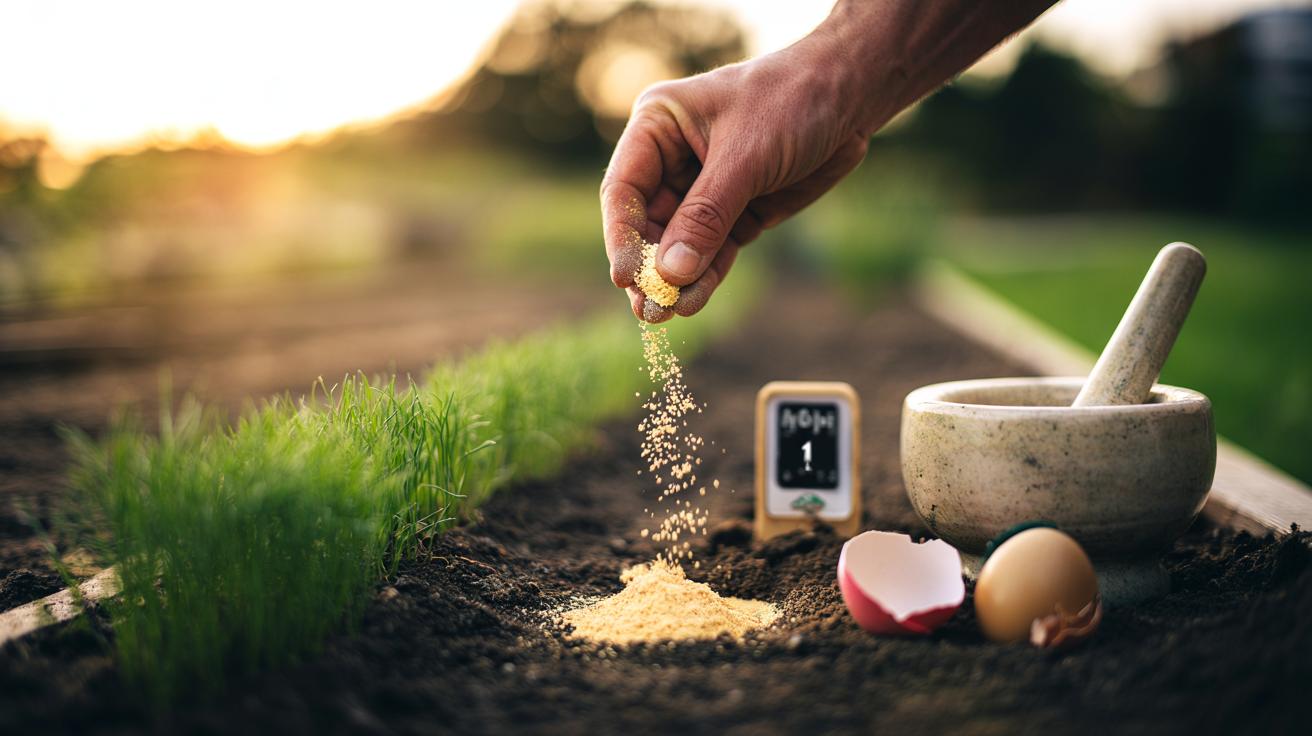
Start simple. Rinse shells, then dry them until brittle; the residual membrane peels away easily once crisp. A low oven or sunny windowsill works. Next, crush to a powder. A rolling pin is classic. A blender or spice grinder is quicker. The aim is fine particles, not flakes. The finer the grind, the faster the release. Sprinkle lightly across the soil surface and fork into the top few centimetres, or blend into compost at the curing stage so microbes begin the job for you. In pots, use a pinch per container; in beds, modest handfuls per square metre spread across the year avoid over-liming.
Timing counts. Apply in autumn to let winter wetting mobilise reactions, or in early spring ahead of vigorous growth. Pair with organic matter. Humus moderates pH and improves cation exchange capacity, helping calcium stick around long enough to be useful. Avoid burying shells deeply where oxygen is scarce; the chemistry is lazier there. And don’t expect uniformity—eggshell is a slow-release input. If you need a rapid lift for brassicas this season, combine shells with a measured dose of agricultural lime guided by a soil test, then let the shells maintain balance thereafter.
| Factor | Effect on Calcium Release | Practical Tip |
|---|---|---|
| Particle Size | Smaller particles dissolve faster | Grind to a fine powder |
| Moisture | Water films drive reaction | Apply before rainy periods |
| Temperature | Warm soil accelerates chemistry | Favour spring and autumn |
| Initial pH | More acidic soils react faster | Test pH to set expectations |
Why Slow Release Unlocks Other Nutrients
Acidity traps nutrients. In sour soils, phosphorus binds with iron and aluminium compounds, becoming stubbornly unavailable. Raise pH gently and those bonds loosen; phosphate becomes mobile enough for roots to sip rather than chase. Molybdenum, vital for nitrogen metabolism, becomes more available too, while the nastier forms of manganese and aluminium back off. That’s the quiet magic of buffering—not dumping nutrients into the soil, but changing the neighbourhood so existing stores can be shared. This is why calcium’s slow release pays twice: it feeds, and it frees.
Calcium itself does more than adjust numbers on a pH strip. It strengthens cell walls, supports tip growth, and helps roots manage salinity stress. In fruiting crops, steady calcium access cuts the risk of blossom end rot where watering is erratic. The delivery matters; sharp liming spikes can antagonise magnesium and potassium uptake. Eggshells, by contrast, nudge conditions over months, protecting balance. Microbial life benefits as acidity softens, decomposers thrive, and organic nitrogen is mineralised. The soil food web hums, and fertiliser efficiency climbs. The result is visible: tighter internodes, straighter stems, deeper green leaves, and roots with the confidence to explore.
Testing, Timing, and Realistic Expectations
All good interventions start with numbers. Use a soil test to read pH and reserve acidity, then plan. Most vegetables sit happily around pH 6.5. Lawns prefer slightly less acidic conditions, around 6.0–6.5. Blueberries, azaleas, and heathers are exceptions; they crave acidity. Do not use eggshells to raise pH for acid-loving plants. Where soils are already near neutral, shells serve best as a calcium top-up and structural aid rather than a liming agent. On chalky ground, save the effort. On peaty plots, keep expectations measured and regular.
Patience remains essential. Finely ground shells begin to act within weeks, but the full benefit rolls out over seasons. If your crop needs help now, blend approaches: a modest dose of ground limestone to correct pH swiftly, eggshell powder for slow release stability, and organic matter to steady the ship. Hygiene matters too: bake shells to reduce pathogen risk before crushing, and avoid sharp fragments in children’s play areas. Sustainability is the quiet bonus. You’re diverting waste, lightening inputs, and building resilience. Think of eggshells as a savings account, not a payday loan.
Used with intent, eggshells are more than a thrifty trick; they are a disciplined way to balance soil pH, deliver calcium, and unlock nutrients at a pace plants and microbes can handle. They reward grinders and planners, not gamblers. The chemistry is simple, the practice accessible, the outcomes pleasingly durable. As your next box of eggs empties, will those shells head for the bin—or become the start of a slow, clever transformation beneath your feet?
Did you like it?4.5/5 (26)