In a nutshell
- 🌱 Onion peels deliver sulphur and quercetin, boosting protein synthesis, antioxidant defences, and plant resilience for visibly healthier growth.
- 🧪 Brew a fast-acting peel infusion: steep skins 12–24 hours, dilute for foliar spray or soil drench, and spot-test before full use.
- ⚡ Expect results in days: greener new growth, perkier leaves, steadier metabolism—especially after transplant shock or brief stress events.
- 📊 Use smart dilutions (e.g., 1:3 for leaves, 1:1–1:2 for soil) and avoid mixing with strong fertilisers on the same day to prevent burn.
- ♻️ A safe, sustainable tonic that upcycles kitchen waste, reduces synthetic inputs, and supports beneficial soil microbes—ideal between major feeds.
Gardeners often bin onion skins without a second thought. That waste could be your plants’ next growth spurt. Onion peels are rich in sulphur, flavonoids, and gentle antimicrobials that nudge roots and leaves back to life. When steeped, they release soluble sulphate and bioactive compounds that plants and soil microbes can use almost immediately. Expect perkier foliage, a glossier leaf surface, and tighter internodes. In pots or beds, the effect is quick. Used correctly, a peel infusion can rejuvenate tired plants in days, not weeks. Here is how the trick works, the science behind it, and the safest way to turn kitchen scraps into reliable plant medicine.
Why Onion Peels Are a Sulphur-Rich Tonic
Onion peels concentrate the onion’s defence chemistry. That makes them a potent, free source of sulphur and protective phenolics. Plants need sulphur to build amino acids such as cysteine and methionine, the backbone of many enzymes that drive growth and repair. It also feeds the glutathione system, the plant’s internal antioxidant network. In practical terms, a sulphur top-up can sharpen chlorophyll function and steady photosynthesis under stress, restoring energy for root growth and leaf expansion. Where soils are low in sulphur, peels supply a fast, gentle correction.
There is more. Outer skins are rich in quercetin, a flavonoid with mild antimicrobial and anti-oxidative effects. In the rhizosphere, that can temper opportunistic microbes while stimulating beneficial ones that help release nutrients. As the peels steep or decompose, they yield sulphate—the plant-ready form—along with traces of potassium and calcium. The result is a light-touch tonic rather than a blunt fertiliser, ideal between major feeds. That is why plants look fresher, with firmer new growth, only days after an application. It is subtle biology doing heavy lifting.
How to Make a Fast-Acting Peel Infusion
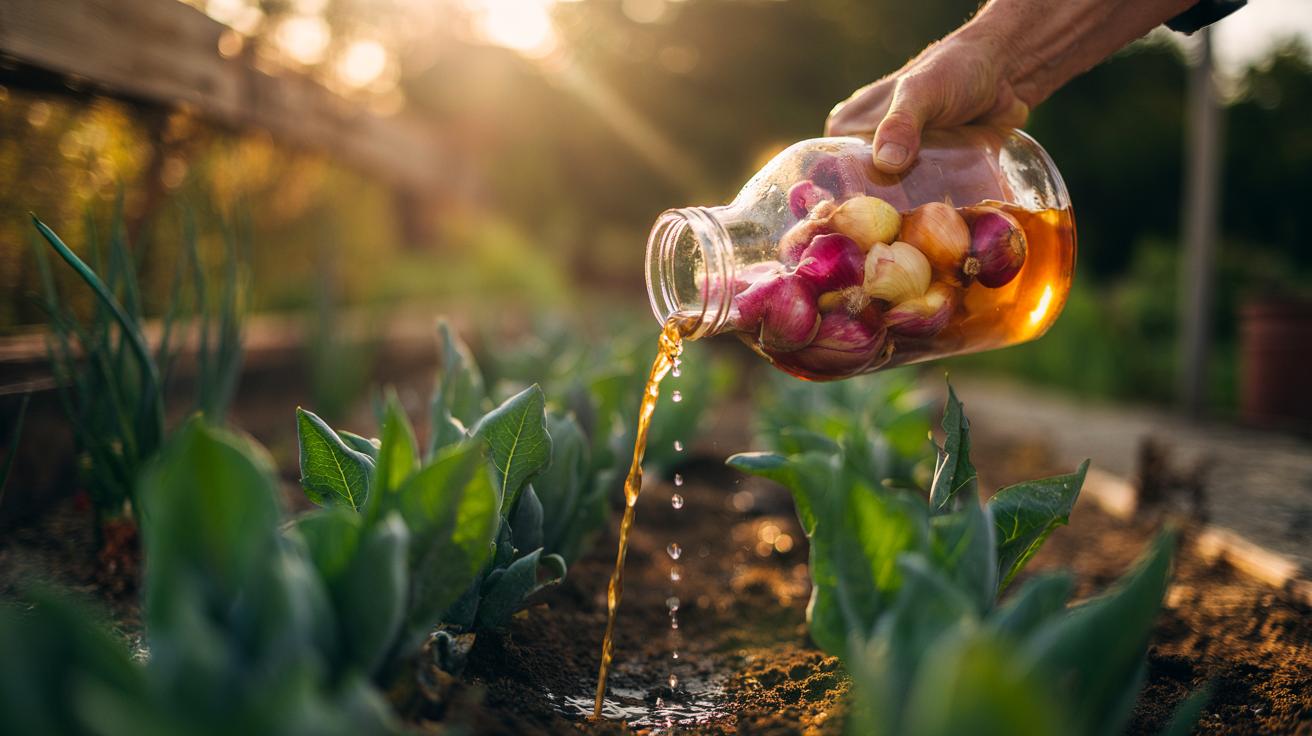
Save dry onion skins from red, white, or brown onions. Rinse quickly to remove kitchen salts. Pack a clean jar halfway with peels and cover with hot (not boiling) water. Cap and steep 12–24 hours. Strain. The liquid should be amber to deep tea in colour; dilute to a light honey shade for foliar sprays, leave stronger for soil drench. Always test on a single plant or leaf first. If there is no spotting after 24 hours, proceed. For containers, water until slight runoff; for borders, apply around the dripline. Repeat weekly in the growing season, less in winter.
| Use | Dilution | Timing | Notes |
|---|---|---|---|
| Foliar spray | 1:3 (infusion:water) | Early morning | Avoid midday sun; fine mist |
| Soil drench | 1:1 to 1:2 | After watering | Apply at dripline, not stem |
| Compost booster | Neat infusion | During turning | Speeds microbial activity |
Keep leftovers in the fridge for up to three days. Discard if it smells putrid rather than oniony-sweet. Do not mix with strong fertilisers on the same day; stagger by 3–4 days to avoid nutrient burn. For orchids and other sensitive plants, use the foliar dilution only.
Field Results in Days: What to Expect
Day one, the soil will smell faintly of onion. That is normal. Within 48–72 hours, many gardeners report leaves looking cleaner, with a slight satin sheen. It reflects better hydration and steadier stomatal behaviour. In the root zone, sulphate fuels protein synthesis and nudges beneficial microbes, which in turn free up nitrogen and micronutrients. Short story: smoother metabolism, faster recovery. Seedlings often stand taller; established plants push fresh tips. Do not expect miracles on starved soil, but do expect visible pep, particularly after transplant shock or a cold snap.
Where there is mild chlorosis from transient nutrient lock-up, new growth tends greener. Flowering plants may set buds more consistently, as energy is redirected from stress responses to development. Keep records. Note date, dilution, and plant response. If leaf edges crisp, you are too strong; dilute. If there is no change after two rounds, your limiting factor may be phosphorus, magnesium, or water, not sulphur. Pair the tonic with a balanced feed schedule and adequate mulch to hold moisture in the root zone.
Safe, Sustainable, and Science-Backed
The logic is sound: sulphur underpins proteins, vitamins, and co-factors that plants cannot make without it. It is central to defence, influencing phytoalexins and the antioxidant pool that keeps cells stable under heat, drought, or pest pressure. Onion peels bring this element in a slow-release, low-salt package, wrapped with flavonoids like quercetin. That pairing provides both nutrient and gentle shield. It is waste upcycled into resilience. In Integrated Pest Management, such tonics slot in as preventatives—strengthening plants so pests and diseases find less purchase—rather than as cures.
There are limits. Avoid drenching seedlings daily; once a week is ample. Do not rely on peels to fix deep deficiencies in phosphorus or potassium; use a balanced fertiliser when soil tests say so. For alliums, brassicas, tomatoes, herbs, and most ornamentals, peel infusions are well tolerated. For succulents and ultra-sensitive houseplants, go weak and infrequent. The environmental dividend is real: fewer synthetic inputs, less kitchen waste, healthier soil biology. That is a win in any British garden, from balcony boxes to allotments on heavy clay.
Onion peels are not magic, but they are smart biology in a teacup: a sulphur-rich, antimicrobial tonic that steadies stressed plants and coaxes new growth within days. Simple to brew, cheap to scale, and easy to control. Use it as a complement, not a crutch, and track your results through the season. Your compost, soil microbes, and plants will tell you if you have the balance right. Ready to trial a jar this weekend and see which crop responds fastest in your patch?
Did you like it?4.6/5 (24)