In a nutshell
- 🌾 Rice water starches feed soil microbes, priming the rhizosphere to release plant-available nutrients and gently accelerate lawn growth without acting as a conventional fertiliser.
- 🧪 Prepare and apply safely: rinse rice (1 cup) in 2 cups water, then dilute 1:10 (rinse water) or 1:20 (boiled water); apply in the cool of morning/evening every 7–14 days, never on waterlogged soil.
- ⏱️ Expect visible improvements in 3–7 days—a richer sheen, tighter colour, and steadier leaf extension—especially when paired with a light NPK feed or compost topdressing and a mowing height around 4–5 cm.
- ⚠️ Manage risks: avoid over-concentration that can cause surface slime, odours, or oxygen dips; skip if it smells rotten; don’t apply under hot sun or onto soggy ground.
- 🧰 Boost results with smart pairings: hollow‑tine aeration, light topdressing, strategic overseeding, and occasional seaweed extract—while solving root issues like shade, compaction, and drainage.
Britain loves a lush lawn, but fertiliser costs and environmental anxieties are nudging many gardeners toward kitchen‑cupboard fixes. Enter rice water—the cloudy liquid left after rinsing or boiling grains—which is being hailed as a fast, gentle tonic for tired turf. It’s not magic. It’s microbiology. The liquid holds starches, traces of amino acids, and micronutrients that can rally soil life and nudge grass into quicker recovery. Used well, it’s cheap, safe, and surprisingly effective. Used badly, it can sour and smell. The trick is dilution, timing, and restraint. Here’s how the science stacks up, how to apply it, and what results you can genuinely expect—often in days, not weeks.
How Rice Water Works in Soil Biology
Grass doesn’t eat starch. Soil microbes do. The cloudy wash from rice is rich in simple carbohydrates that act as a quick meal for bacteria and fungi living around roots. As these microbes feast, they multiply, respire, and begin cycling nutrients locked in organic matter. That microbial churn releases small pulses of plant‑available nitrogen, phosphorus, and potassium, plus hormones and metabolites that can stimulate root growth. Think of rice water as fuel for the soil engine, not as a conventional fertiliser. The boost is subtle but swift, especially in spring and early summer when temperatures wake up the underground workforce.
There’s a caveat. Microbes powered by carbohydrate need oxygen. Overdo the starch and you risk a short-term oxygen dip at the surface, which can leave the upper root zone stressed. That’s why dilution matters. The aim is to “prime” the rhizosphere—that halo of life around roots—without creating an anaerobic slick. In well‑drained loams, a light, even spray soaks in quickly, nudging biology without swamping it.
Fermented rice water adds another twist. Left to sit for 24–48 hours, it develops mild acids, B‑vitamins, and a richer microbial starter. That can be helpful, but it also raises the odour and the risk of applying an unbalanced brew. If it smells rotten, do not use it. Fresh or lightly soured, yes; putrid, no.
Preparing And Applying Rice Water Safely
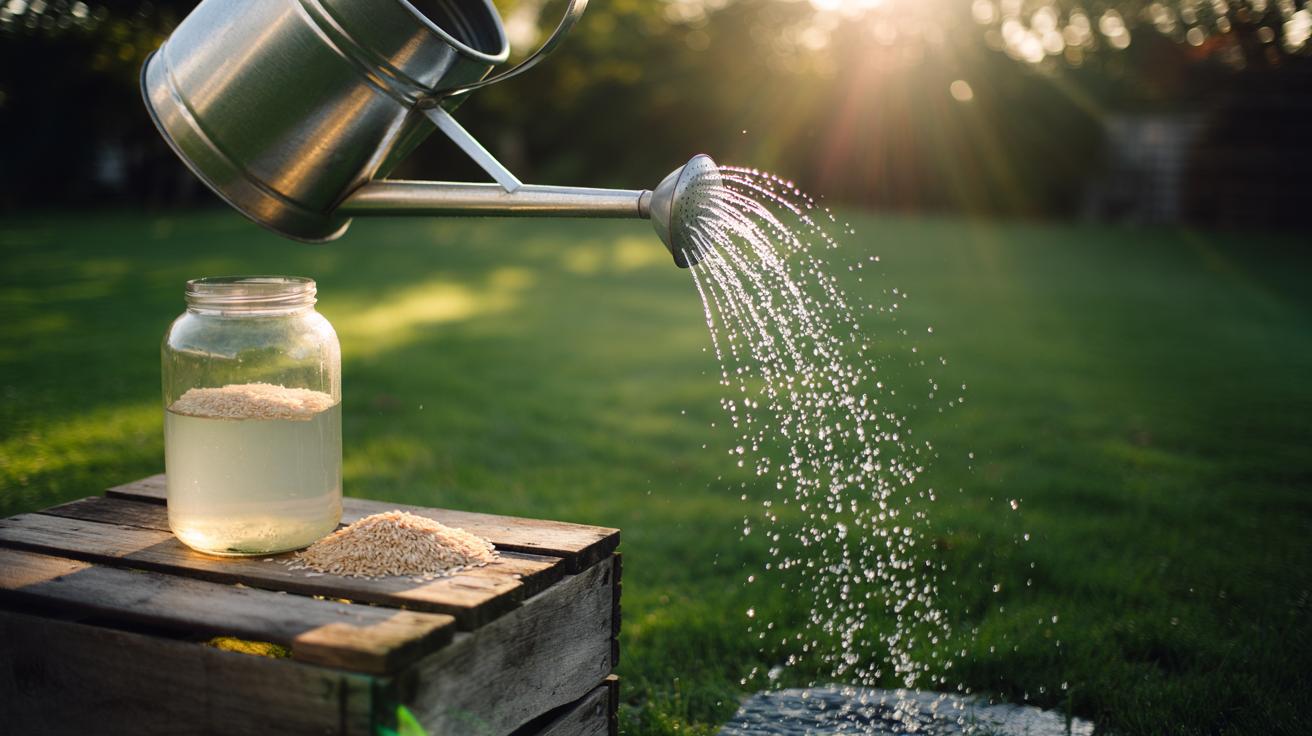
Rinse one cup of uncooked rice in two cups of water, agitating for 30–60 seconds. Strain the cloudy liquid and dilute it 1:10 with clean water for lawns. If you’re using water from boiled rice, cool it fully and dilute more aggressively—1:20—because it’s richer in starches. Apply with a watering can fitted with a fine rose or a pump sprayer. Early morning or late afternoon is best. Never apply under hot sun or onto waterlogged ground. Start with a small test patch and wait 72 hours before treating the whole lawn.
Frequency depends on soil and season. In active growth, once every 7–14 days is ample. On thin or compacted lawns, pair treatments with light aeration and correct mowing height to avoid smothering the surface. Stop during cold snaps when soil life is sluggish, and pause if rain is forecast to be torrential—runoff wastes effort and can feed algae on paths.
| Lawn Size | Dilution | Typical Volume | Frequency | Notes |
|---|---|---|---|---|
| 10 m² | 1:10 (rinse) / 1:20 (boil) | 2–3 L per treatment | Every 7–14 days | Test a 1 m² patch first |
| 50 m² | As above | 10–15 L per treatment | Every 10–14 days | Water in lightly if dry |
| 100 m² | As above | 20–30 L per treatment | Every 14 days | Combine with aeration |
What Results To Expect, And When
Under typical UK spring conditions—soil above 8–10°C, consistent moisture—lawns often look perkier within 3–7 days of a rice‑water application. You may notice a richer sheen, slightly faster leaf extension, and tighter colour across patchy areas. That’s microbial priming at work, not a huge nutrient dump. Expect a nudge, not a miracle. On recently scarified turf, the effect can be more visible because new shoots respond quickly when the biological pump is primed.
Growth gains stack with a balanced feed. If the lawn is hungry, pair rice water with a modest NPK fertiliser—something like a spring 10‑2‑4 at half rate—or with a fine compost topdressing brushed into the sward. The carbohydrates help unlock nutrients from that organic addition, speeding establishment without forcing sappy growth. Keep the mower a tad higher (around 4–5 cm for many rye/fescue mixes) to reduce stress while roots deepen.
In summer dry spells, be cautious. The soil biology you’re feeding still needs moisture; without it, benefits stall. Water lightly after application if the surface is parched, or delay until showers return. Autumn can be productive too, with cooler air and warm soil extending the window for rooting and recovery before winter dormancy.
Risks, Limits, And Smart Pairings
Rice water is low‑risk, but not risk‑free. Over‑concentration can foster surface slime, odours, and minor algae growth on paving if overspray isn’t rinsed away. It can attract fungus gnats if spilled in pots or left pooling. Do not pour undiluted rice water on a stressed or waterlogged lawn. If you’re in heavy clay, go lighter and use after aeration so oxygen keeps pace with the microbial feast.
It isn’t a cure for everything. Shade, compaction, and poor drainage dwarf nutrient tweaks. Moss thrives on low light and damp acidity, not on carbohydrate feeds. Address mowing height, traffic patterns, and moisture first. Then use rice water as a gentle accelerator rather than a substitute for basics. If your soil test shows low phosphorus or potassium, correct those with targeted inputs; rice water won’t fill that gap.
For best results, pair with small, regular wins: hollow‑tine aeration in spring, light topdressing with screened compost, and overseeding thin areas with a resilient rye/fescue blend. Consider a monthly seaweed extract for micronutrients and stress tolerance. This “little and often” approach turns rice water from a viral trick into a coherent, soil‑first programme.
Used with a cool head and a watering can, rice water can coax greener, denser turf in surprisingly short order. The science is simple: feed the microbes, and they’ll feed the grass. Costs are negligible, risks are manageable, and the results often arrive inside a week when conditions suit. The real win is healthier soil that needs fewer heavy inputs over time. Will you try a trial strip on your lawn this week—and what will you pair it with to build a season‑long plan that puts biology first?
Did you like it?4.4/5 (29)