In a nutshell
- 🍌 Natural chemistry: banana peel contains enzymes, plant waxes, mild acids, and potassium that lift grime, soften micro-scratches, and add a quick sheen to sealed wood.
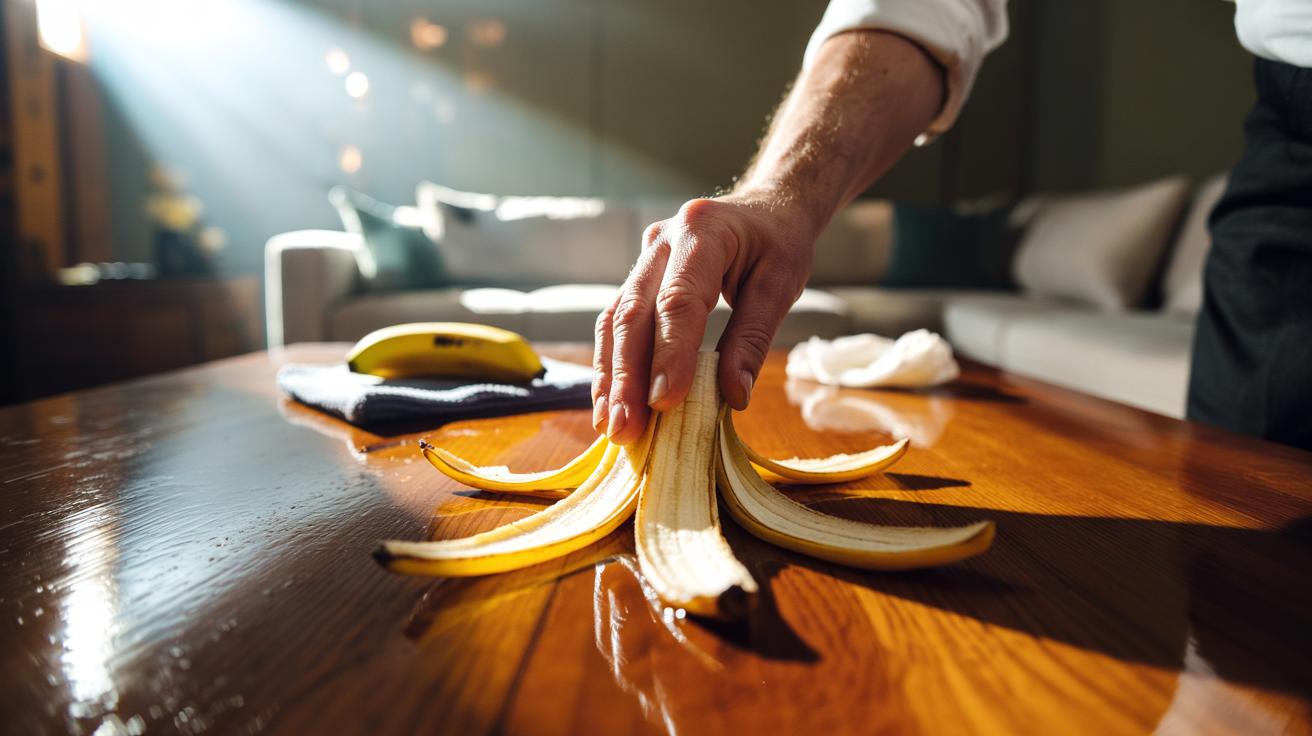
- 🧽 Fast method: test a hidden spot, wipe the inside peel along the grain, pause for two minutes, then buff thoroughly with a clean microfibre cloth.
- 🪵 Best surfaces: apply on sealed wood (varnish, polyurethane, lacquer) and veneers; avoid unfinished timber and floors, and use care with shellac/French polish.
- 🌿 Benefits: a low-cost, low-waste alternative to aerosol polishes; potassium’s antistatic effect slows dust resettling and evens reflections for a warmer look.
- ⚠️ Limits: not a restoration fix—heavy grease, white water marks, or deep scratches may need pre-cleaning or professional help; use sparingly to avoid residue.
In a nation that loves a good home hack, few tips are as disarmingly simple as this: use a banana peel to revive tired timber. The idea sounds like folklore until you learn the science. Plant enzymes, gentle acids, and natural waxes conspire to lift grime, soften micro-scratches, and add a quick sheen without synthetic solvents. It’s cheap. It’s sustainable. It’s oddly satisfying. And it can restore wood shine in minutes. From an oak sideboard dotted with water rings to a dulled beech chair, the humble peel can help your furniture look newly loved, not newly lacquered.
The Science Inside a Banana Peel
A banana peel is a tidy chem-lab of starches, enzymes, potassium salts, polyphenols, and plant waxes. The inside surface carries a slick matrix that behaves like a low-tack cleaning pad: it loosens dust, fingerprints, and sticky residues without biting into the finish. Enzymatic action is the quiet workhorse here. While household peels won’t blitz varnish, their mild enzyme profile and soft acidity nudge organic grime away from the surface. Tiny particles of silica in the peel provide near-imperceptible micro-abrasion, helping level faint swirls and scuffs.
Meanwhile, the peel’s natural oils leave a microfilm that refracts light more evenly across the wood, creating that welcome, subtle glow. You are not slathering sugar on furniture; you are applying a naturally balanced mix that cleans, fills, and buffs. Potassium contributes to antistatic behaviour, so dust resettles more slowly post-polish. Polyphenols act as gentle antioxidants, which can help slow the look of oxidation on old finishes. The net result is a modest but visible upgrade: less haze, fewer smudges, calmer reflections. For sealed furniture in everyday rooms, this gentle cocktail is often all you need.
Step-by-Step: from Fruit Bowl to Furniture Glow
Clear the surface. No clutter, no crumbs. Choose a ripe, yellow banana—no blackened skins, no green firmness. Split it and work with the inside of the peel. Always test a small, hidden spot first and wait five minutes. If the finish looks happy—no streaking, no clouding—you’re good to go. Wipe along the grain using light, even strokes. Think of it like a damp dusting, not a sauce spread. Too much pressure compresses residue into pores and edges.
Refresh your peel section as it dries or picks up visible grime. After one full pass, pause for two minutes. This brief dwell lets the enzymes and waxes do their subtle magic. Now take a clean, dry microfibre cloth and buff briskly, again along the grain. If you feel any tack, flip to a fresh side and buff until the surface feels squeaky-smooth. Less is more—excess residue is the enemy of shine. For a nude, matte-oiled look you want to preserve, dilute the effect by following with a barely damp cloth before the final buff. Repeat monthly on high-touch pieces; seasonally for the rest.
When to Use It, and When to Avoid It
Banana peel polish thrives on sealed wood—varnish, polyurethane, lacquer, and most modern veneers. It’s useful on glossy piano-finish cabinets, kitchen benches (not chopping blocks), and chair rails that collect fingerprints. Avoid unfinished timber, raw edges, and open-grain antiques where moisture can wick in. Be cautious with shellac or French-polished heirlooms; a feather-light touch and a longer test patch are wise. Do not use on floors—slickness is a slip hazard—and steer clear of wax-heavy chalk paints unless you intend to rebuff the wax layer immediately.
If you’re dealing with heavy grease, nicotine film, or silicone build-up from spray polishes, pre-clean gently with a damp microfibre plus a drop of mild washing-up liquid, then dry thoroughly. The peel will then refine, not fight, the surface. Sensitive to scents? Ventilate; banana volatiles disperse quickly. And remember: this is a maintenance polish, not a restoration formula. If finish failure, white bloom from water damage, or deep scratches are present, no fruit can fix that—seek specialist treatment.
| Surface | Use? | Notes |
|---|---|---|
| Sealed hardwood (varnish/poly) | Yes | Light wipe, then buff dry for quick sheen. |
| Veneer cabinets | Yes | Test edges; avoid forcing residue into seams. |
| French polish/shellac | With care | Tiny test first; minimal pressure, fast buff. |
| Unfinished wood | No | Moisture and sugars can penetrate fibres. |
| Floors | No | Slippery; keep peels well away. |
Done well, banana peel polishing is a smart, low-waste alternative to aerosol shine. It celebrates what the fruit already carries: gentle enzymes, plant waxes, and just enough acidity to lift the dullness modern life leaves behind. Your reward is a warmer reflection and a surface that feels newly tended, not smothered in chemicals. It’s quick, inexpensive, and kinder to the air you breathe. So, next time you finish your porridge and stare at the peel, will you bin it—or give your favourite table a minute of quiet, gleaming attention?
Did you like it?4.6/5 (28)