In a nutshell
- 🧼 Transform curtains in one wash with bicarbonate of soda: it lifts grime, brightens colours, and leaves a clean, neutral scent at low cost.
- 🔬 Gentle chemistry: as a mild alkali, bicarbonate of soda raises pH to boost detergents, aids odour neutralisation, and buffers hard water for a softer drape.
- 🧺 Practical method: label check and pre-soak (2 tbsp in 4–5 L, 45–60 mins), then 60–120 g in the drum with detergent, 30–40°C gentle cycle, add vinegar in the rinse, hang to dry.
- ⚠️ Targeted fixes: smoke and cooking haze respond well; pair with colour-safe oxygen bleach for yellowing, use a bicarbonate paste for mildew, and take care with blackout linings—avoid silk or acetate.
- 🌍 Smart and sustainable: cut back on heavy softeners, improve indoor air quality, protect fibres in hard water areas, and save money with a low-impact laundry staple.
Give tired curtains a smart, airy reset with a cupboard staple the UK swears by: bicarbonate of soda. It’s inexpensive, gentle on fibres, and astonishingly effective at tackling lingering odours and dulling film in a single wash. The secret lies not in heavy perfume but in quiet chemistry that lifts soils and neutralises smells. Curtains are dust magnets. They sip cooking vapour, city grit, and tobacco traces. Then they hang on to it. One measured dose, one careful cycle, and you can see and smell the difference. Here’s how to make them look brighter, feel softer, and hang better, without wrecking the fabric or your weekend.
The Science Behind Baking Soda On Curtains
Call it baking soda or bicarbonate of soda. In the drum it acts as a mild alkali, raising the wash’s pH so detergents unstick grime more easily. That alkaline pH disrupts bonds between fatty residues and fibres, helping remove the grey cast that dulls pale fabrics. It’s not bleach. Yet by loosening that film, it makes colours look clearer and whites look less tea-stained. The effect is subtle but visible. Curtains regain drape and lightness.
There’s another trick: authentic odour neutralisation. Baking soda doesn’t mask smells; it binds and buffers acidic and sulphurous compounds common in smoke and cooking. Air the panels after washing and those volatile notes dissipate faster. If your curtains smell “clean” rather than perfumed, the deodorising step worked. Because it’s gentle, bicarbonate suits household textiles with mixed fibres, linings, and headings, where harsh oxidisers might cause streaks. In hard-water regions, it also softens water slightly, boosting surfactant performance and reducing residue that can stiffen a weave. That means a smoother hand, less creasing, and more honest colour.
Step-By-Step Wash Method For Brighter Drapes
First, check the care label and test for colourfastness on a hidden hem. Remove hooks and rings. Shake outside to drop loose dust. For heavy buildup, pre-soak: dissolve 2 tablespoons (about 30 g) of bicarbonate of soda in 4–5 litres of warm water; submerge for 45–60 minutes, then lightly squeeze out. Pre-soaking lifts greasy films before the main cycle. Do not wring; it twists fibres and sets creases.
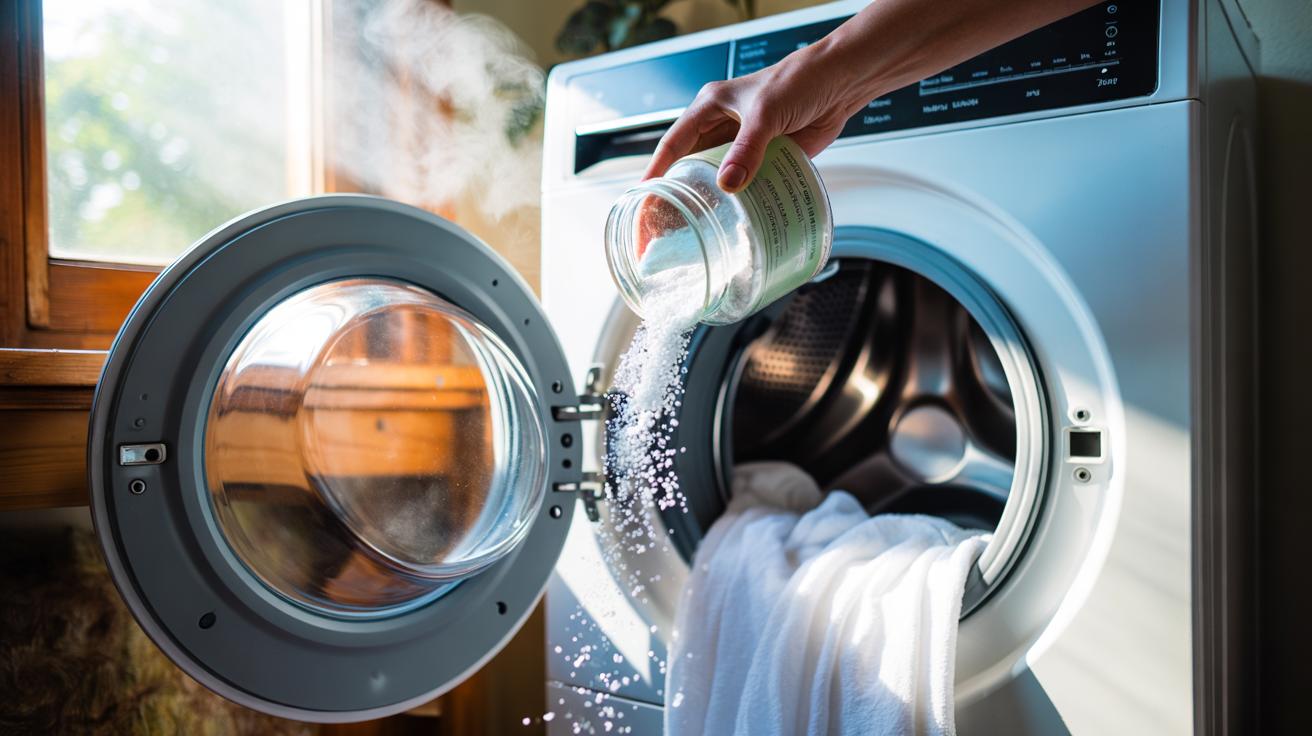
Machine wash on a gentle cycle. Add your usual detergent at the standard dose, then sprinkle 1/3–1/2 cup (60–120 g) of bicarbonate directly into the drum with the curtains. For synthetics and mixed weaves, choose 30–40°C; for cotton or linen, 40°C is typically safe unless the label forbids it. Avoid overloading; curtains need space to circulate. For a freshness boost, add 100 ml distilled white vinegar to the softener drawer for the rinse only. This helps release detergent residues and softens the hand. Keep vinegar separate from the main wash so it doesn’t neutralise the bicarbonate mid-cycle. Dry by hanging immediately; gravity smooths creases. Steam lightly if needed.
| Load Size | Fabric Type | Bicarbonate Dose | Water Temp | Cycle Notes |
|---|---|---|---|---|
| Small (2 panels) | Sheer/Polyester | 60–80 g | 30–40°C | Delicate, low spin |
| Medium (2–3 panels) | Cotton/Linen mix | 90–120 g | 40°C | Gentle, medium spin |
| Heavy (Lined/Blackout) | Mixed fibres | 90–120 g | Cold–30°C | Short, low spin; check label |
Stain And Odour Scenarios: What Works Best
Not all grime is equal. Use bicarbonate of soda smartly and you’ll coax different problems out without drama. Smoke haze and city air leave acidic notes that bicarbonate tames brilliantly; a pre-soak plus the standard drum dose usually sorts persistent odours. For yellowing from cooking vapours, pair bicarbonate with oxygen-based, colour-safe bleach (sodium percarbonate) at the label dose. This adds gentle oxidation while the alkali loosens fatty soils. Always spot test before using any booster on dyed fabrics.
Mildew? First, deal with the cause. Wash only after you’ve aired the room and ensured panels are bone-dry. Treat visible spots by dabbing a paste (1 part bicarbonate to 1 part water) onto the area, wait 15 minutes, then rinse and proceed with the main cycle. For pet dander and pollen, a bicarbonate pre-soak followed by a cold rinse helps reduce allergens without over-agitating fibres. Be cautious with delicate interlinings and blackout coatings; prolonged soaking can weaken adhesives. In those cases, opt for a short, cool wash and immediate line-drying. If the lining feels tacky or ripples when wet, reduce soak time and skip high spins. The goal is steadier brightness and a clean, neutral scent—no heavy perfumes to clash with your room.
Care, Safety, And Sustainability Benefits
There’s a practical upside beyond the wash day glow. Because bicarbonate of soda boosts detergent efficiency, you can often reduce fragrance-heavy softeners and still get a supple drape. That’s a win for sensitive noses and indoor air quality. In hard-water belts from London to Birmingham, bicarbonate’s buffering action helps prevent mineral film that makes curtains feel board-stiff. Fewer residues also mean less greying over time. Gentle alkalinity, used correctly, protects both colour and fibre integrity.
Safety is simple: read the care label, avoid hot washes on synthetics, and never overfill the drum. Baking soda is generally safe with standard laundry detergents and colour-safe oxygen bleach; keep vinegar for the rinse. Skip it on silk or acetate, and be cautious with metallic eyelets—dry promptly after washing. Environmentally, bicarbonate is low-impact, widely available, and encourages fewer chemical additives per load. It’s budget-friendly too. That combination—lower cost, lighter footprint, better feel—explains why households return to this quiet classic. Your curtains will show it in how they hang, how they catch the light, and how fresh the room smells after one well-planned wash.
Clean curtains change a room’s mood. Light flows better. Colours breathe. With a small measure of bicarbonate of soda and a few careful choices, you can freshen and brighten in one wash without fuss, waste, or guesswork. Start with a pre-soak if soil is heavy, keep temperatures modest, and let gravity be your iron. The result feels calm and looks crisp. Ready to elevate your windows this weekend—what fabric and finish are you treating first?
Did you like it?4.5/5 (24)